100 Fascinating Facts About Texas You Didn’t Know

Pardon us for showing our pride. But if your state could boast these facts, y'all would be proud too! TexasProud has gathered 100 of our favorite facts about the Lone Star State and checked each one against reliable sources, including the U.S. Census Bureau, USDA, Texas Parks and Wildlife, the National Park Service, and the Texas State Historical Association. Figures were last updated in October 2026.
Big Land, Big Sky: Size and Geography
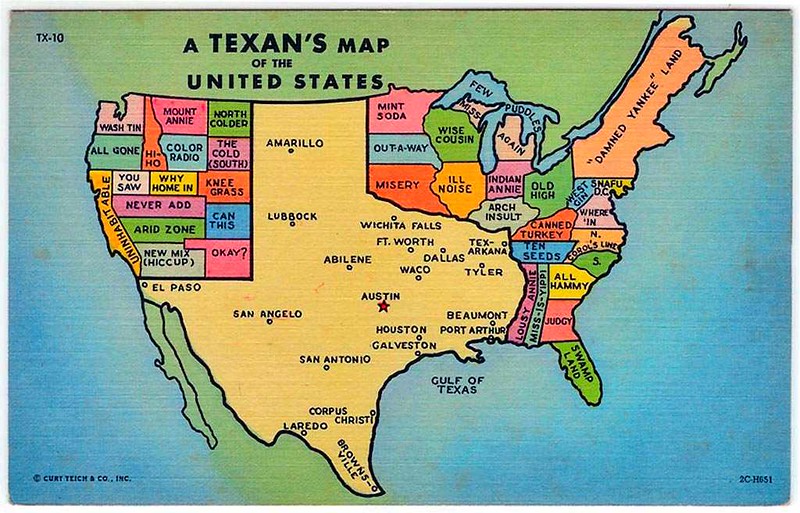
- Texas covers 268,596 square miles, making it the second-largest state after Alaska. That's about 7.4% of the entire United States.
- Texas stretches about 801 miles from north to south and about 773 miles from east to west.
- The land area of Texas is larger than all of New England, New York, Pennsylvania, Ohio and Illinois combined. Those ten states have roughly 251,000 square miles of land; Texas has about 261,000.
- Texas has 254 counties, more than any other state.
- Brewster County is the largest county in Texas at about 6,192 square miles. It's more than 500 square miles bigger than the state of Connecticut and over three times the size of Delaware.
- Loving County is the least-populated county in the United States. Only 64 people lived there at the 2020 Census.
- El Paso is closer to Los Angeles than it is to Port Arthur, Texas. As the crow flies, it's about 700 miles to L.A. and about 755 miles to Port Arthur.
- Port Arthur, in turn, is closer to Jacksonville, Florida (about 735 miles) than it is to El Paso.
- Not all of Texas runs on Central Time. El Paso and Hudspeth counties in far West Texas are on Mountain Time.
- Guadalupe Peak is the highest point in Texas at 8,751 feet above sea level.
- Palo Duro Canyon is the second-largest canyon in the United States, about 120 miles long and up to 800 feet deep. Texans call it the "Grand Canyon of Texas."
- Padre Island is the longest barrier island in the world, and Padre Island National Seashore protects about 70 miles of it, the longest undeveloped stretch of barrier island on Earth.
- Caddo Lake is the only naturally formed large lake in Texas. It was created by a massive log jam on the Red River called the Great Raft, though a dam has helped hold its water since the early 1900s.
- The Rio Grande forms the Texas–Mexico border for about 1,254 miles.
- Texas has about 367 miles of Gulf coastline.
- Enchanted Rock, a giant pink granite dome near Fredericksburg, "groans" at night. The rock creaks as it cools after a hot day, which inspired legends among the Tonkawa and other peoples.
Six Flags and a Republic: Texas History
- Six national flags have flown over Texas: Spain, France, Mexico, the Republic of Texas, the Confederate States and the United States.
- The name "Texas" comes from the Caddo word taysha, meaning "friends." Fittingly, the state motto is simply "Friendship."
- Texas was an independent nation from 1836 to 1845. The Republic of Texas had its own presidents, army, navy and currency.
- The Texas Declaration of Independence was signed on March 2, 1836, at Washington-on-the-Brazos.
- The Alamo fell on March 6, 1836, after a 13-day siege.
- The Battle of San Jacinto, which won Texas its independence, lasted only about 18 minutes. Texian soldiers charged shouting "Remember the Alamo!"
- The first shots of the Texas Revolution were fired at Gonzales on October 2, 1835, under a homemade flag reading "Come and Take It."
- Texas became the 28th state on December 29, 1845.
- Texas could, in theory, split into five states. The 1845 annexation resolution allows up to four new states to be formed from Texas territory with the state's consent.
- Texas kept its public lands when it joined the Union, which is one reason so little of the state is owned by the federal government today.
- The builders of the Texas Capitol were paid in land: more than 3 million acres in the Panhandle, which became the famous XIT Ranch.
- The Texas Capitol is the largest state capitol in gross square footage, and at 302.64 feet tall it stands about 15 feet taller than the U.S. Capitol.
- The San Jacinto Monument near Houston is the tallest monumental column in the world. At 567 feet, it's about 12 feet taller than the Washington Monument.
- Juneteenth began in Texas. On June 19, 1865, Union Gen. Gordon Granger announced in Galveston that enslaved people in Texas were free. In 1980, Texas became the first state to make Juneteenth an official holiday, and it became a federal holiday in 2021.
- The 1900 Galveston hurricane is the deadliest natural disaster in U.S. history, killing an estimated 6,000 to 12,000 people.
- The modern oil age began at Spindletop near Beaumont on January 10, 1901, when a gusher blew oil more than 100 feet into the air.
- The U.S. Army once used camels in Texas. In the 1850s, the Army's experimental Camel Corps was based at Camp Verde in the Hill Country.
- The Texas Rangers trace their roots to 1823, when Stephen F. Austin hired men to protect his colony.
- Stephen F. Austin is known as the "Father of Texas." His first settlers became known as the "Old Three Hundred."
- Sam Houston served as governor of two different states, Tennessee and Texas, and was twice president of the Republic of Texas.
- Austin was chosen as the capital in 1839 on the site of a tiny settlement called Waterloo.
- The San Antonio Missions, including the Alamo, are the only UNESCO World Heritage Site in Texas. They earned the designation in 2015.
Famous Texans
- Two U.S. presidents were born in Texas: Dwight D. Eisenhower (Denison) and Lyndon B. Johnson (near Stonewall).
- Lyndon B. Johnson is the only president sworn in aboard an airplane. He took the oath on Air Force One at Dallas Love Field on November 22, 1963.
- Audie Murphy, from Hunt County, was one of the most decorated American soldiers of World War II and a Medal of Honor recipient who later became a Hollywood actor.
- Fleet Adm. Chester Nimitz, commander of the U.S. Pacific Fleet in WWII, was born in Fredericksburg, now home to the National Museum of the Pacific War.
- Rock and roll pioneer Buddy Holly grew up in Lubbock.
- The first words heard from Apollo 11 after it landed on the Moon were addressed to Texas: "Houston, Tranquility Base here. The Eagle has landed." Mission Control at Johnson Space Center has guided U.S. human spaceflight since 1965.
Cities and Landmarks
- Four of the ten largest cities in the U.S. are in Texas: Houston (4th), San Antonio (7th), Dallas (9th) and Fort Worth (10th), according to 2025 Census estimates. Austin is 12th.
- Fort Worth and Austin both passed one million residents in 2025.
- Houston is the largest U.S. city without traditional zoning laws.
- The Texas Medical Center in Houston is the largest medical complex in the world. It includes the world's largest children's hospital and largest cancer hospital.
- The Port of Houston is the nation's busiest port by waterborne tonnage.
- DFW International Airport covers 17,207 acres, about 27 square miles, making it larger than the island of Manhattan. It even has its own ZIP code.
- Austin calls itself the "Live Music Capital of the World," an official slogan since 1991.
- San Antonio's River Walk winds for about 15 miles through the city.
- Big Tex, the State Fair of Texas mascot, stands 55 feet tall. He was rebuilt three feet taller after a fire in 2012.
- Billy Bob's Texas in Fort Worth bills itself as the "World's Largest Honky Tonk."
- Real longhorns still walk the streets of Fort Worth. The Fort Worth Herd makes a cattle drive through the Stockyards twice a day.
- The Houston Livestock Show and Rodeo is billed as the world's largest livestock exhibition and rodeo.
Texas by the Numbers
- About 31.7 million people live in Texas (2025 Census estimate), second only to California.
- Texas added 391,243 residents between 2024 and 2025, more than any other state.
- If Texas were a country, its $2.9 trillion economy would rank about eighth in the world.
- Texas has more Fortune 500 headquarters than any other state: 57 on the 2026 list.
- Texas has been the nation's top exporting state for 24 years in a row.
- Texas produced about 42% of all U.S. crude oil in 2025. It also leads the nation in natural gas production.
- Texas generates more wind power than any other state, about 28% of the nation's total in 2025, more than the next three states combined.
- Texas runs its own power grid. ERCOT manages electricity for about 90% of the state and is largely separate from the rest of the country.
- Texas has no state personal income tax.
- Texas has more farms and ranches than any other state: 230,662 of them, covering 125.5 million acres (2022 Census of Agriculture).
- Texas has more cattle than any other state, about 12.1 million head in 2026, nearly double second-place Nebraska.
- Texas also leads the nation in cotton, sheep and goats.
- The legendary King Ranch covers about 825,000 acres, nearly 1,300 square miles.
Texas-Born Food, Drink and Inventions
- Dr Pepper was created in Waco in 1885, a year before Coca-Cola, making it the oldest major soft drink brand in America.
- The world's first frozen margarita machine was invented in Dallas in 1971 by restaurateur Mariano Martinez. The original now belongs to the Smithsonian.
- Fritos corn chips got their start in San Antonio in 1932.
- The integrated circuit (the microchip) was invented in Dallas in 1958 by Jack Kilby of Texas Instruments, who later won the Nobel Prize in Physics.
- Liquid Paper was invented in the 1950s by Bette Nesmith Graham, a Dallas secretary looking for a better way to fix typing mistakes.
- Fletcher's Corny Dogs debuted at the State Fair of Texas in 1942.
- Whataburger was founded in Corpus Christi in 1950.
- H-E-B was founded in Kerrville in 1905 when Florence Butt opened a small grocery store.
- Blue Bell Creameries has been making ice cream in Brenham since 1907.
- Chili is the official state dish (1977), tortilla chips and salsa are the state snack (2003), and pecan pie is the state pie (2013).
- Texas even has an official state domino game: Texas 42 (2011).
Lone Star Symbols
- The mockingbird has been the state bird since 1927.
- The bluebonnet has been the state flower since 1901. Since 1971, every species of bluebonnet found in Texas shares the title.
- The pecan has been the state tree since 1919.
- Texas has three official mammals: the armadillo (small), the longhorn (large) and the Mexican free-tailed bat (flying).
- The Texas horned lizard is the state reptile.
- Rodeo is the official state sport, and the guitar is the official state instrument.
- Texas even has a state dinosaur: Sauroposeidon proteles, a giant long-necked plant-eater.
- The Lone Star flag was adopted in 1839, when Texas was still an independent republic.
Wild Texas: Nature and Wildlife
- Bracken Cave near San Antonio is home to the largest bat colony in the world, with 15 to 20 million Mexican free-tailed bats each summer.
- Austin's Congress Avenue Bridge shelters about 1.5 million bats, the largest urban bat colony in the world.
- Texas has about 5.6 million white-tailed deer, more than any other state.
- Between 400,000 and 500,000 American alligators live in Texas, mostly in the coastal marshes of Southeast Texas.
- Big Bend National Park has more kinds of birds, bats and cacti than any other U.S. national park.
- The only natural wild flock of endangered whooping cranes spends each winter at and near Aransas National Wildlife Refuge on the Texas coast.
- Padre Island is the most important U.S. nesting beach for the Kemp's ridley, the world's most endangered sea turtle.
- Waco Mammoth National Monument preserves the nation's only recorded nursery herd of Columbian mammoths, females and young that died together tens of thousands of years ago.
- You can see real dinosaur footprints in the Paluxy River at Dinosaur Valley State Park in Glen Rose.
Texas Weather Extremes
- The hottest temperature ever recorded in Texas is 120°F, at Seymour in 1936 and Monahans in 1994.
- The coldest is −23°F, at Tulia in 1899 and Seminole in 1933.
- Texas averages more tornadoes per year than any other state, thanks in large part to its sheer size.
If you know some facts about Texas that you think should be added here, comment below and we'll consider them for the list.
Sources
U.S. Census Bureau (QuickFacts, Vintage 2025 estimates); USDA National Agricultural Statistics Service (2022 Census of Agriculture, January 2026 Cattle report); U.S. Energy Information Administration; Texas Parks and Wildlife Department; National Park Service; Texas State Historical Association; Texas State Preservation Board; Office of the Texas Governor; Port Houston; Bat Conservation International; Texas A&M Office of the State Climatologist; Fortune 500 (2026).
More from the almanac
Culture · Facts
How Big is Texas? You Won’t Believe How Huge It Is!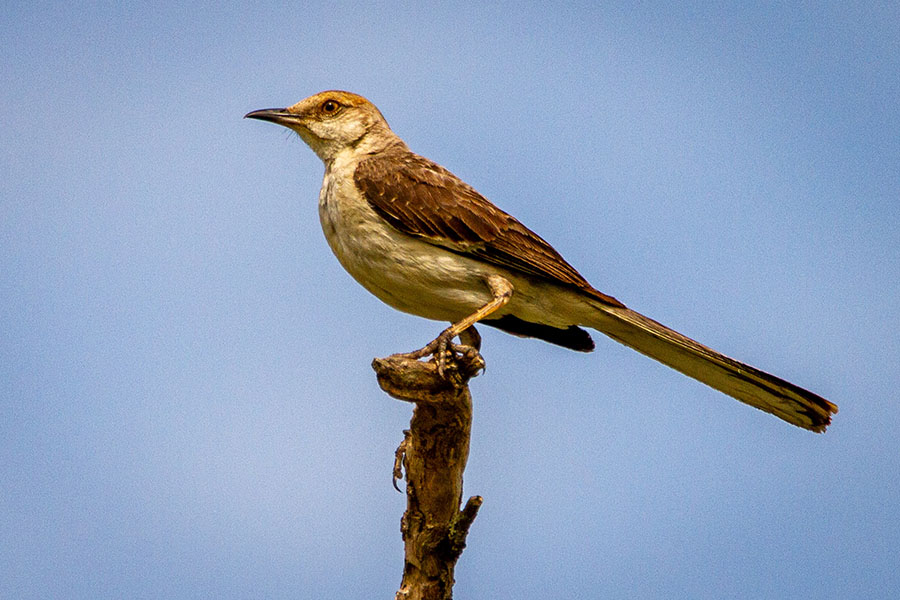
Events · Facts
My Texas Copperhead Snake Bite – A True Story
Events · Facts
Battleship Texas I and II